首页 诗词 字典 板报 句子 名言 友答 励志 学校 网站地图
当前位置: 首页 > 教程频道 > 开发语言 > 编程 >

自个儿动手写写:HashMap源码浅析

2012-10-27 
自己动手写写:HashMap源码浅析虽说论坛中有很多关于HashMap源码的分析,并且都是分析得很不错的文章,但是我

自己动手写写:HashMap源码浅析

虽说论坛中有很多关于HashMap源码的分析,并且都是分析得很不错的文章,但是我还是想写出自己的一份心德!

?

三. HashMap

?

还是先来看看HashMap的类结构吧!

public class HashMap<K, V> extends AbstractMap<K, V> implements Map<K, V>, Cloneable, Serializable

?

1. HashMap的数据存储结构

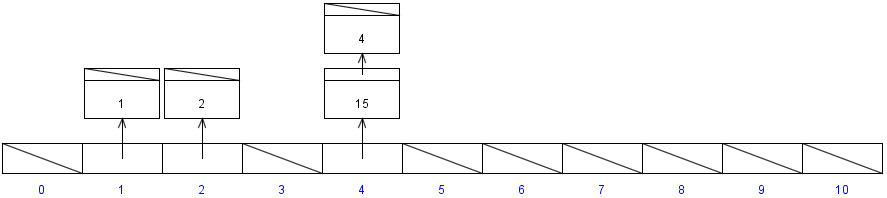
HashMap采用的是一种数组+链表的存储数据结构!先来感性地看一张图:
自个儿动手写写:HashMap源码浅析

其中数据1,2,4,15都是属于HashMap中存储的value值,至于这些值为什么存放在不同位置,这是key经过hash运算,再计算得出的;

这里有人就会问了:”这个计算出来的结果会不会重复呢?“,答案是:这种情况是很有可能发生的。接着又会问:”重复了的话,值怎么放呢?“,

此时链表的作用就发挥了,图中4和15这两个value值就是这种情况。ps:下面会详细介绍。

?

2. ?几个重要的成员变量

/**                                                                       * The default initial capacity - MUST be a power of two.                 */                                                                      static final int DEFAULT_INITIAL_CAPACITY = 16;                                                                                                   /**                                                                       * The maximum capacity, used if a higher value is implicitly specified   * by either of the constructors with arguments.                          * MUST be a power of two <= 1<<30.                                       */                                                                      static final int MAXIMUM_CAPACITY = 1 << 30;                                                                                                      /**                                                                       * The load factor used when none specified in constructor.               */                                                                      static final float DEFAULT_LOAD_FACTOR = 0.75f;                                                                                                   /**                                                                       * The table, resized as necessary. Length MUST Always be a power of two. */                                                                      transient Entry[] table;                                                                                                                          /**                                                                       * The number of key-value mappings contained in this map.                */                                                                      transient int size;                                                                                                                               /**                                                                       * The next size value at which to resize (capacity * load factor).       * @serial                                                                */                                                                      int threshold;                                                                                                                                    /**                                                                       * The load factor for the hash table.                                    *                                                                        * @serial                                                                */                                                                      final float loadFactor;                                                  

?DEFAULT_INITIAL_CAPACITY :其实并不是HashMap的默认初始化容量,而是table数组的长度,并且值大小必须是2的幂次方;

?MAXIMUM_CAPACITY:table数组的最大长度是2的30次方;

?table:存储了所有的key-value mapping!

? ?我们先来看一下Entry的源码片段:

static class Entry<K, V> implements Map.Entry<K, V>//类结构//重要的变量final K key;                        V value;                            Entry<K, V> next;                   final int hash;   
Entry是HashMap的一个内部静态类,这些成员变量你们一看就应该明白的,其中next是在链表上的下一个Entry;例如上图中:值为15的Entry的next就指向了值为4的Entry,而值为1的Entry的next为null,因为没有此链表上没有next Entry.

?size:HashMap的已存储数据的数量;ps:不是table数组的长度

?DEFAULT_LOAD_FACTOR:默认的加载因子是0.75f;

?threshold:称之为闸阀,如果HashMap的size >= threadhold了,那么table数组就要扩容了,并且扩容率是100%,即table数组长度变为原来的两倍;

此时有人要问了:”这个threshold的值大小是怎么算出来的呢?“,源码中已经表述得很清楚了,下面是构造函数中的一个代码片段:

// Find a power of 2 >= initialCapacity  int capacity = 1;                        while (capacity < initialCapacity)           capacity <<= 1;                                                               this.loadFactor = loadFactor;            threshold = (int)(capacity * loadFactor);

?其中initialCapacity是构造函数的一个参数,意为:初始容量;明白了吧,这个initialCapacity并不能直接拿来用,要经过一定的运算保证,

初始化的table数组大小必须是2的幂次方并且不能比initialCapacity的值小。

?

?

3. 构造函数

/**                                                                                         * Constructs an empty <tt>HashMap</tt> with the specified initial                          * capacity and load factor.                                                                *                                                                                          * @param  initialCapacity the initial capacity                                             * @param  loadFactor      the load factor                                                  * @throws IllegalArgumentException if the initial capacity is negative                     *         or the load factor is nonpositive                                                */                                                                                        public HashMap(int initialCapacity, float loadFactor)                                      {                                                                                              if (initialCapacity < 0)                                                                       throw new IllegalArgumentException("Illegal initial capacity: " + initialCapacity);    if (initialCapacity > MAXIMUM_CAPACITY)                                                        initialCapacity = MAXIMUM_CAPACITY;                                                    if (loadFactor <= 0 || Float.isNaN(loadFactor))                                                throw new IllegalArgumentException("Illegal load factor: " + loadFactor);                                                                                                         // Find a power of 2 >= initialCapacity                                                    int capacity = 1;                                                                          while (capacity < initialCapacity)                                                             capacity <<= 1;                                                                                                                                                                   this.loadFactor = loadFactor;                                                              threshold = (int)(capacity * loadFactor);                                                  table = new Entry[capacity];                                                               init();                                                                                }                                                                                          

?上面的这个构造函数是比较重要的,另外一些构造函数都是依赖于它的。在明白了上面我描述的内容后,此构造函数理解起来是相当简单的,不在累述了!

?

?

4. 几个重要的方法

? ? put(K key, V value)

/**                                                                  * Associates the specified value with the specified key in this map. * If the map previously contained a mapping for the key, the old    * value is replaced.                                                *                                                                   * @param key key with which the specified value is to be associated * @param value value to be associated with the specified key        * @return the previous value associated with <tt>key</tt>, or       *         <tt>null</tt> if there was no mapping for <tt>key</tt>.   *         (A <tt>null</tt> return can also indicate that the map    *         previously associated <tt>null</tt> with <tt>key</tt>.)   */                                                                 public V put(K key, V value)                                        {                                                                       if (key == null)                                                        return putForNullKey(value);                                    int hash = hash(key.hashCode());                                    int i = indexFor(hash, table.length);                               for (Entry<K, V> e = table[i]; e != null; e = e.next)               {                                                                       Object k;                                                           if (e.hash == hash && ((k = e.key) == key || key.equals(k)))        {                                                                       V oldValue = e.value;                                               e.value = value;                                                    e.recordAccess(this);                                               return oldValue;                                                }                                                               }                                                                                                                                       modCount++;                                                         addEntry(hash, key, value, i);                                      return null;                                                    }                                                                   

?

这个方法时比较重要的,也是值得好好分析一下的,下面我们一步一步来分析:

1. key == null 时,看一下putForNullKey(V value)这个方法的源码:

?

/**                                                       * Offloaded version of put for null keys                 */                                                      private V putForNullKey(V value)                         {                                                            for (Entry<K, V> e = table[0]; e != null; e = e.next)    {                                                            if (e.key == null)                                       {                                                            V oldValue = e.value;                                    e.value = value;                                         e.recordAccess(this);                                    return oldValue;                                     }                                                    }                                                        modCount++;                                              addEntry(0, null, value, 0);                             return null;                                         }                 ?
/**                                                                * Adds a new entry with the specified key, value and hash code to * the specified bucket.  It is the responsibility of this         * method to resize the table if appropriate.                      *                                                                 * Subclass overrides this to alter the behavior of put method.    */                                                               void addEntry(int hash, K key, V value, int bucketIndex)          {                                                                     Entry<K, V> e = table[bucketIndex];                               table[bucketIndex] = new Entry<K, V>(hash, key, value, e);        if (size++ >= threshold)                                              resize(2 * table.length);                                 }                                                                                        

这里先遍历table[0]出的链表,看是否已经存放过key为null的Entry,如果存在则替换掉此Entry的value值,否则就在table[0]处插入Entry。

ps:这里我们可以看出key为null的Entry均是放在table[0]处的,并且hash值也为0.

?

2. key != null 时,先通过key计算出hash值,再通过hash值运算出table的索引值i,接着循环遍历在table[i]处的链表,

看链表中的key是否已经存在,存在就替换value值,不存在就new一个Entry出来,插入的链表中,next指向插入前table[i]处的Entry!

?

get(Object key)

?

/**                                                                                  * Returns the value to which the specified key is mapped,                           * or {@code null} if this map contains no mapping for the key.                      *                                                                                   * <p>More formally, if this map contains a mapping from a key                       * {@code k} to a value {@code v} such that {@code (key==null ? k==null :            * key.equals(k))}, then this method returns {@code v}; otherwise                    * it returns {@code null}.  (There can be at most one such mapping.)                *                                                                                   * <p>A return value of {@code null} does not <i>necessarily</i>                     * indicate that the map contains no mapping for the key; it's also                  * possible that the map explicitly maps the key to {@code null}.                    * The {@link #containsKey containsKey} operation may be used to                     * distinguish these two cases.                                                      *                                                                                   * @see #put(Object, Object)                                                         */                                                                                 public V get(Object key)                                                            {                                                                                       if (key == null)                                                                        return getForNullKey();                                                         int hash = hash(key.hashCode());                                                    for (Entry<K, V> e = table[indexFor(hash, table.length)]; e != null; e = e.next)    {                                                                                       Object k;                                                                           if (e.hash == hash && ((k = e.key) == key || key.equals(k)))                            return e.value;                                                             }                                                                                   return null;                                                                    }                                                                                   

?get方法也很简单,对于key值为null的做一个特殊处理,table[0]出的链表遍历一遍,有就返回value,没有就返回null,不多说了.

?

?

containsKey(Object key)和containsValue(Object value)

说一下思路吧:

containsKey就是经过一系列的运算找到key对应的table index值(当然了null key要特殊处理的,你们懂的!),再循环遍历table[index]的链表即可。

containsVlaue没有好的办法,两层循环来搞定,看源码吧:

?

public boolean containsValue(Object value)           {                                                        if (value == null)                                       return containsNullValue();                                                                           Entry[] tab = table;                                 for (int i = 0; i < tab.length; i++)                     for (Entry e = tab[i]; e != null; e = e.next)            if (value.equals(e.value))                               return true;                             return false;                                    }                                                  

?看到了吧,遍历数组,再遍历每一个链表。

?

?

remove(Object key)

由于remove方法就是调用了removeEntryForKey,我们来看这个方法的源码:

?

/**                                                                                   * Removes and returns the entry associated with the specified key                    * in the HashMap.  Returns null if the HashMap contains no mapping                   * for this key.                                                                      */                                                                                  final Entry<K, V> removeEntryForKey(Object key)                                      {                                                                                        int hash = (key == null) ? 0 : hash(key.hashCode());                                 int i = indexFor(hash, table.length);                                                Entry<K, V> prev = table[i];                                                         Entry<K, V> e = prev;                                                                                                                                                     while (e != null)                                                                    {                                                                                        Entry<K, V> next = e.next;                                                           Object k;                                                                            if (e.hash == hash && ((k = e.key) == key || (key != null && key.equals(k))))        {                                                                                        modCount++;                                                                          size--;                                                                              if (prev == e)                                                                           table[i] = next;                                                                 else                                                                                     prev.next = next;                                                                e.recordRemoval(this);                                                               return e;                                                                        }                                                                                    prev = e;                                                                            e = next;                                                                        }                                                                                                                                                                         return e;                                                                        }                                                                                    

?

也说一下思路吧:

经过一系列的运算找到key对应的table index值,也就找到了这个链表,遍历链表得到此key的Entry,删除此Entry,再将链表接起来,

算法细节大家就自己直接看源码吧,不再累述了!

?

entrySet()

?

/**                                                                  * Returns a {@link Set} view of the mappings contained in this map. * The set is backed by the map, so changes to the map are           * reflected in the set, and vice-versa.  If the map is modified     * while an iteration over the set is in progress (except through    * the iterator's own <tt>remove</tt> operation, or through the      * <tt>setValue</tt> operation on a map entry returned by the        * iterator) the results of the iteration are undefined.  The set    * supports element removal, which removes the corresponding         * mapping from the map, via the <tt>Iterator.remove</tt>,           * <tt>Set.remove</tt>, <tt>removeAll</tt>, <tt>retainAll</tt> and   * <tt>clear</tt> operations.  It does not support the               * <tt>add</tt> or <tt>addAll</tt> operations.                       *                                                                   * @return a set view of the mappings contained in this map          */                                                                 public Set<Map.Entry<K, V>> entrySet()                              {                                                                       return entrySet0();                                             }                                                                   

?为何要将一下这个方法? 论坛中也有很多谈论map遍历的效率的问题,用哪种方法效率高! 如果你能够了解HashMap的内部数据结构的话这个问题就很简单了,

当然是遍历table这个数组就行了啊,效率杠杠地!呵呵,对entrySet就是返回的这个,不过是以Set的形式返回而已!

ps:对于这个方法的细节问题我们就不讨论了,有兴趣的可以自己看源码分析!

?

?

好了,HashMap的内容暂时就这么多了,当然了还有很多的问题我们没有讨论,比如hash运算的问题,我觉得这个是另外一块的内容了,

对于了解HashMap暂且可以抛开这个问题,hash运算是个很大的讨论内容了,这里不再累述了,有兴趣的读者可以google了解下。

?

ps:附件中我上传了一个jar包,可以模拟Data Structure相关的运算,非常的不错!推荐下载!命令java - jar visualization.jar?就可以运行!

里面包含了hashing模拟运算过程!

?

也可参考一篇文章Java Map 集合类简介?

沙发,感谢楼主分享HashMap的精彩解析,很直观也很明了~学习了!

热点排行