
基本信息·出版社:National Geographic Society ·页码:256 页 ·出版日期:2007年11月 ·ISBN:1426201184 ·条形码:9781426201189 ·装帧:平装 ·正 ...
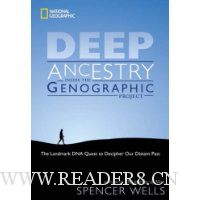
基本信息·出版社:National Geographic Society
·页码:256 页
·出版日期:2007年11月
·ISBN:1426201184
·条形码:9781426201189
·装帧:平装
·正文语种:英语
·外文书名:遥远的祖先
内容简介 The fossil record locates human origins in Africa, but little is known about the great journey that took Homo sapiens to the far reaches of the Earth. How did we, each of us, end up where we are? Why do we appear in such a wide array of different colours and features? Such questions are even more amazing in light of genetic evidence that we are all related - descended from a common African ancestor who lived only 60,000 years ago. Thanks to new genetic testing methods, we now know that the greatest history book ever written is the one hidden in our DNA. In Deep Ancestry", geneticist and explorer Spencer Wells unravels the slight changes in our DNA over time to tell the ancient story of our shared human journey. He also details the current work of The Genographic Project - the landmark five-year study, already underway at ten research laboratories around the globe, that will assemble the world's largest collection of DNA samples to map how humankind populated the planet.He describes how, over the next five years, the Project will use sophisticated computer analysis of DNA contributed by hundreds of thousands of people - including indigenous populations and the general public - to reveal man's migratory history and to better understand the connections and differences that make up the human race. The narrative works backward, starting from today and gradually working its way to humankind's common ancestors.From the beginning, the book taps into a reader's interest in genealogy, family history, and ethnic identity. Most of us have a decent sense of our family history, but eventually we all hit a brick wall. DNA takes us beyond it, and this is the unifying theme that will lead us from the stories of the present into the realm of deep ancestry. "Deep Ancestry" represents the very latest research on where we came from and relates them to our own personal quest to discover the deep ancestry behind our family genealogies and touch the depths of our common origins.
作者简介 Spencer Wells is an Explorer-in-Residence at the National Geographic Society and the director of the Genographic Project. After studying under genetic pioneer Luigi Cavalli-Sforza at Stanford University, he began an unusual career that mixes science, writing, and filmmaking. His acclaimed first book, The Journey of Man, combined his own DNA research with the work of archaeologists, paleoanthropologists, paleoclimatologists, and linguists to show how modern humans came to populate the planet.
媒体推荐 "In this concise and well-written work, Wells "(The Journey of Man)" provides an accessible introduction to genetic anthropology, the study of human history using genetic evidence. It is a remarkable journey that will appeal to readers of all backgrounds interested in exploring the science and research behind human evolution." "--Publishers Weekly"
"Wells ends the book with an invitation to take part in the project... This is a rare chance to not only learn about ourselves, but to contribute in a worldwide scientific experiment." "--Bookpage"
编辑推荐 From Publishers Weekly
In this concise and well-written work, Wells (The Journey of Man) provides an accessible introduction to genetic anthropology, the study of human history using genetic evidence. Wells is the director of the Genographic Project, which collects DNA samples from a wide array of world populations to better understand human history over the last 200,000 years. Wells does a fantastic job distilling both genetics and genetic anthropology into straightforward topics, presenting sophisticated material accessibly without oversimplification. He gives the reader the basic concepts (Y chromosomes, mtDNA, haplogroups, genetic markers) and then proceeds to step through genographic research from its 19th-century origins to the present day. In so doing, he takes the reader back to the 170,000-year-old female genetic ancestor of every person alive today: the so-called African Eve. It is a remarkable journey that will appeal to readers of all backgrounds interested in exploring the science and research behind human evolution, although those with more experience in the sciences may find some of the material elementary.
Copyright © Reed Business Information, a division of Reed Elsevier Inc. All rights reserved. --This text refers to the Hardcover edition.
From Booklist
The study of human prehistory has been revolutionized by genetic evidence. Here a leading researcher in genetic anthropology surveys the specialty. He warns that its promise could go unrealized because contemporary mobility is reshuffling the human genome, obscuring the DNA details by which experts can trace the geographic ancestry of contemporary ethnic groups. To rescue genetic information, Wells heads National Geographic Society's Genographic Project, which collects and analyzes DNA from volunteers to create a database of the human genome as it was before the Industrial Revolution. He relays the personal stories and ethnic lineage of five such volunteers while explaining both the DNA markers and the logic by which he and his colleagues can reliably place and date a person's ancestry. Even at this early stage, genomic discoveries about ancient migrations are astounding, and the potential of the NGS project to continue them is apparent from the open questions Wells poses in his epilogue. An informative and exciting picture of science in the making. Gilbert Taylor
Copyright © American Library Association. All rights reserved --This text refers to the Hardcover edition.
Review
"In this concise and well-written work, Wells "(The Journey of Man)" provides an accessible introduction to genetic anthropology, the study of human history using genetic evidence. It is a remarkable journey that will appeal to readers of all backgrounds interested in exploring the science and research behind human evolution." "--Publishers Weekly"
"Wells ends the book with an invitation to take part in the project... This is a rare chance to not only learn about ourselves, but to contribute in a worldwide scientific experiment." "--Bookpage"
Review
"In this concise and well-written work, Wells (The Journey of Man) provides an accessible introduction to genetic anthropology, the study of human history using genetic evidence. It is a remarkable journey that will appeal to readers of all backgrounds interested in exploring the science and research behind human evolution." —Publishers Weekly
"Wells ends the book with an invitation to take part in the project... This is a rare chance to not only learn about ourselves, but to contribute in a worldwide scientific experiment." —Bookpage